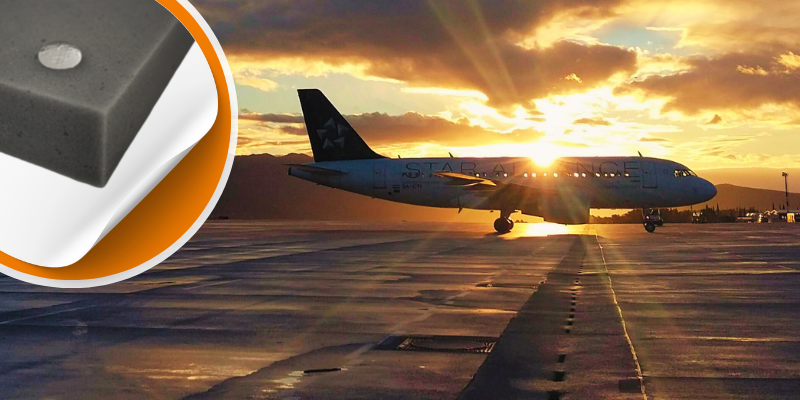
16 Dec Polydamp Hydrophobic Melamine Foam: Effective Insulation for Aircraft
Whether you’re trying to moderate cabin noise, stop condensation in the fuselage, or meet strict weight and flame-retardancy standards, your choice of insulation has a direct impact, not just on comfort, but on performance, safety, and operating costs.
In this article, I want to walk you through a material we’ve used with consistent success across demanding aerospace environments: Polydamp Hydrophobic Melamine Foam. For engineers and sourcing professionals who need proven performance in thermal, acoustic, and moisture-sensitive applications, this solution delivers significant benefits.
First, let’s start with a brief definition.
Key Takeaways
- Polydamp hydrophobic melamine foam is an open-cell melamine foam treated to repel water, so it maintains mechanical, thermal, and acoustic performance in moisture-prone aircraft areas where standard melamine can fail.
- Hydrophobic melamine foam helps prevent insulation weight gain, dripping inside cavities, mold/mildew, and corrosion-related issues by resisting water absorption in fuselage, cargo, and underfloor zones.
- Polydamp hydrophobic melamine foam combines lightweight construction with thermal stability across extreme temperatures, plus strong broadband acoustic absorption for engine, aerodynamic, vibration-driven, and mechanical noise.
- Polydamp hydrophobic melamine foam is positioned as aviation-compliant for fire safety (low smoke/low toxicity) and is available in multiple grades to match density, flexibility, and installation needs across aircraft applications.
Quick Links
- What Is Hydrophobic Melamine Foam?
- How Hydrophobic Melamine Foam Improves Aircraft Insulation
- Key Technical Properties of Polydamp Hydrophobic Melamine Foam
- Aircraft Applications
- Advantages of Hydrophobic Melamine Foam Over Traditional Insulation Materials
- Choosing the Right Polydamp Hydrophobic Melamine Foam Grade
- Conclusion
What Is Hydrophobic Melamine Foam?
Hydrophobic melamine foam is an advanced open-cell foam, engineered from melamine, specifically developed for effectiveness and long-term stability in demanding aerospace environments. Traditional melamine foam is well known for its excellent acoustic absorption and high heat resistance, but it has one severe limitation that rules it out for more demanding environments. It is inherently hydrophilic, readily absorbing water from liquid and vapor sources.
Hydrophobic melamine foam is different. Through a specialized treatment process, the open-cell structure becomes water-repellent, allowing the foam to maintain its mechanical, acoustic, and thermal properties in moisture-prone areas of aircraft.
Key Characteristics
- It is lightweight for strictly mass-restricted aviation use
- It is highly hydrophobic, resisting water absorption and moisture retention
- It is flame-retardant, meeting industry-standard flammability requirements
- It is thermally stable at extremely high and low temperatures
- It offers excellent acoustic performance due to its open-cell geometry
In comparison to standard melamine foam, this variant offers substantially better performance where conditions of condensation, humidity, or water intrusion are risks. This includes fuselage cavities, cargo areas, and environmental control systems.
How Hydrophobic Melamine Foam Improves Aircraft Insulation
Hydrophobic melamine foam enhances overall insulation performance across the aircraft, offering improvements that standard materials cannot match.
1. Moisture Resistance and Condensation Control
Moisture accumulation in aircraft structures isn’t just inconvenient; it can cause rapidly destructive corrosion, microbial growth, electrical issues, and long-term degradation of insulation system performance. This is particularly problematic in zones such as:
- Many areas of the fuselage
- Behind interior panels
- In cargo zones
- Under the cabin floor areas
Because it doesn’t absorb water, hydrophobic melamine foam eliminates many of the failure modes seen in conventional open-cell insulation. The hydrophobic treatment prevents several problem outcomes:
- It completely prevents weight gain from water retention
- No water buildup means no dripping inside cavities
- Dryness strongly discourages mold and mildew formation
- Perhaps most importantly, this means no accelerated corrosion of associated metal parts
These benefits make this material a major upgrade over non-treated melamine foam and most alternatives.
2. Thermal Insulation
Aircraft experience wide temperature swings, from sub-zero exterior conditions at altitude to heat generated by cabin electronics, environmental systems, and the sun. Hydrophobic melamine foam offers:
- Consistent thermal resistance across temperature extremes
- Improved energy efficiency in heating and cooling systems
- Greater passenger comfort by reducing hot and cold spots
Its lightweight composition makes it especially valuable for large-area thermal insulation applications where mass is a limiting factor.
3. Acoustic Absorption
Noise control is another area where this material outperforms traditional solutions. Its open-cell network is ideal for absorbing:
- Engine and turbine noise
- Aerodynamic noise from lifting surfaces and external features
- Vibration-driven structural noise
- Mechanical sounds from flight systems and actuation
Key Technical Properties of Polydamp Hydrophobic Melamine Foam
As an engineer or designer, choosing hydrophobic melamine foams can help you bring together several performance advantages that are especially important in modern aircraft design.
Lightweight Structure
Weight directly drives cost and performance in aviation, where every gram affects fuel burn, payload, and certification requirements. Polydamp hydrophobic melamine foam delivers an exceptional strength-to-weight ratio and lower installed mass than many alternative polymer-based insulations, while maintaining consistent performance and resisting water absorption. This combination makes it particularly well-suited for cabin liners, fuselage insulation, and HVAC ducting.
Fire Resistance
One of the biggest reasons aerospace applications engineers opt for this material is its ability to meet critical safety standards. Hydrophobic melamine foam is engineered to comply with FAA/FAR 25.853 flammability requirements, while generating low smoke and exhibiting low toxicity in combustion scenarios. It also supports REACH compliance for hazardous materials control. These properties are mandatory for commercial and military airframes, helping manufacturers achieve regulatory compliance and, ultimately, build safer aircraft.
Durability in Extreme Environments
Aircraft insulation must withstand high vibration, thermal cycling, pressure variation, mechanical loads from installation and service, as well as exposure to oils, cleaning agents, and moisture. Hydrophobic melamine foam offers long service life under these conditions and helps reduce maintenance interventions over the life of the aircraft, which are key reasons to encourage its use in high-reliability aerospace and space applications.
Aircraft Applications
Hydrophobic Polydamp melamine foam integrates seamlessly across multiple zones of an aircraft, where its thermal, acoustic, and moisture-resistant advantages deliver consistent performance.
Cabin Interiors
Used in sidewall and ceiling panels as well as floor systems, the foam combines thermal insulation and acoustic damping to reduce cabin noise, improve temperature control, and enhance overall passenger comfort.
Bulkheads
By lining bulkhead structures, the foam provides an effective thermal and acoustic barrier between aircraft zones, helping control noise transmission and temperature differences throughout the cabin.
Fuselage & Airframe Insulation
Installed behind structural panels and in system cavities, the foam reduces air circulation and condensation risk while maintaining thermal stability across the airframe, supporting both comfort and structural longevity.
HVAC & Environmental Systems
Its open-cell structure damps vibration and smooths airflow, which helps reduce noise, minimize pressure pulsations, and improve the overall efficiency of environmental control and ducting systems.
Cargo Areas
Cargo bays are particularly prone to moisture and temperature swings. The foam’s hydrophobic nature helps manage condensation while still delivering effective thermal and acoustic performance in these challenging zones.
Advantages of Hydrophobic Melamine Foam Over Traditional Insulation Materials
| Property / Outcome | Hydrophobic Melamine Foam | Fiberglass | Polyurethane Foams | Standard Melamine Foam |
|---|---|---|---|---|
| Water / Moisture Behaviour | No water uptake; stays dry | Can hold moisture | May absorb or trap moisture | Low absorption; not hydrophobic |
| Weight Over Time | Weight stays stable | Can get heavier when wet | Weight can change with age/moisture | Mostly stable; slight uptake |
| Acoustic Damping | High broadband damping | Moderate; needs more thickness | Variable; often lower | Good, but slightly lower |
| Thermal Stability / Brittleness | Stable; resists embrittlement | Stable; binders can age | Can shrink or crack with heat | Stable; may embrittle long term |
| Flammability Performance | Passes aviation tests without additives | Non-combustible glass; binder dependent | Often needs flame retardants | Naturally flame-resistant |
| Maintenance / Lifecycle Cost | Fewer issues; long service life | Can settle or degrade | Aging and breakdown common | Robust; less tolerant to moisture |
| Material Consolidation | Often replaces multiple materials | Usually part of a stack | Typically single-function | Typically one of several layers |
Choosing the Right Polydamp Hydrophobic Melamine Foam Grade
For an aircraft design team, selecting the right insulation material is about matching foam properties to the specific environment and performance targets of each zone in the airframe. Among POLYDAMP melamine foams, you’ll find several hydrophobic melamine foam grades, each optimized for different installation needs. The main choices include:
- POLYDAMP Hydrophobic Melamine Foam (PHM) — standard-density, general-purpose grade.
- POLYDAMP Ultra-Flex Hydrophobic Melamine Foam (PHM‑UF) — a more flexible, lighter-weight option for curved surfaces or ductwork.
- POLYDAMP Ultra-Lite Hydrophobic Melamine Foam (PHM‑UL) — the lightest hydrophobic variant, ideal where minimal mass is critical.
When comparing and selecting among these hydrophobic grades, key considerations include:
- Density and weight constraints: Lower-density variants reduce installed mass, which is important for fuel efficiency and payload optimization.
- Form-factor and geometry: Flexible grades simplify installation in curved or irregular cavities, ducts, or trim panels.
- Operating environment: Temperature extremes, vibration, moisture or condensation exposure, and potential exposure to oils or cleaning agents must all be accounted for.
- Required performance criteria: Thermal insulation value, acoustic damping, water repellency, fire-safety compliance (flame spread, smoke, toxicity) and long-term stability.
The ID Group team of experts can review your application and help you determine the optimal acoustic vibration insulation for your application.
Conclusion
Polydamp hydrophobic melamine foam offers aerospace manufacturers and maintenance teams a high-performance insulation material that solves all of the real-world challenges they face: moisture, noise, temperature, and flammability. Its hydrophobic properties and exceptional weight-to-performance ratio make it an ideal choice for modern aircraft seeking both efficiency and regulatory compliance.
If you’re looking for insulation that enhances safety, reduces maintenance, and supports a quieter, more efficient aircraft, this foam is one of the best solutions available today.
The ID Group specializes in noise, vibration and temperature management for demanding aerospace environments. Contact us to learn more about our hydrophobic melamine foams and our precision die-cutting capabilities. We can help you select and customize the right grade and shape for your specific aircraft application.
Now Offering New Enclosure Shielding Gaskets
At The ID Group, we’re used to working clos...
The Advantages of Metal Etching for Custom Board Level EMI Shielding Solutions
Board level EMI shielding is imperative in en...

What is Board-Level EMI Shielding and Why Does It Matter for PCB Design
In the electronics industry, where devices ar...

Custom BeCu Board Level Shielding: Precision Protection for Critical Applications
Electronic systems are steadily becoming fast...

4 Differences Between Thermally and Electrically Conductive Elastomers
Conductive elastomers make a significant cont...

The Role of EMI Shielding in Medical Devices
Conductive elastomers make a significant cont...

Industry-Specific EMI RFI Shielding Applications
As the technology environment becomes increas...

5 Most Common Types of EMI Shielding Gaskets
EMI and RFI interferences are expressions of ...

4 Things to Consider When Choosing a Conductive Elastomer
Conductive elastomers make a significant cont...

The Role of Electrically Conductive Elastomers in EMI Shielding
From properties to composition, explore how e...

7 Benefits of EMI Shielding for Manufacturers
Electromagnetic interference (EMI) is a const...

Why Choose The ID Group for Your EMI RFI Shielding Needs
As owner of The ID Group, I'm proud to say th...

TechEtch 2500 Series: A New Standard in Shielding Effectiveness
In the world of EMI shielding solutions, the ...

Custom Die-Cut Foam Gaskets: Everything You Need to Know
Essential components in various industries, c...

Gasket Materials for Effective Sealing and Protection
Gaskets play a critical role in many of today...

9 Metals and Materials Used in EMI Shielding
Electromagnetic interference (EMI) is a nuisa...

EMI Shielding Fingerstock Gasket Mounting Options—An Overview
Electromagnetic interference (EMI) can affect...

Critical Performance Variables for EMI Honeycomb Vents
As technology evolves, so do the products req...


How Tech Etch Products Help with EMI RFI Shielding Issues
Electronic devices need robust protection fro...


What to Know About Beryllium Copper and EMI RFI Shielding
Today, most electronic devices are equipped w...

What is EMI RFI Shielding and How Does it Work?
To understand what is EMI RFI shielding, it i...