02 Dec What is Board-Level EMI Shielding and Why Does It Matter for PCB Design
In the electronics industry, where devices are constantly becoming smaller and faster with higher clock-speed processing, electromagnetic interference (EMI) poses serious challenges. EMI shielding at board level offers a compact and effective solution by integrating conductive enclosures directly onto printed circuit boards (PCBs). These shields protect against unwanted emissions from noisy components and shield sensitive circuits from external interference. This increases signal integrity and delivers regulatory compliance in transmission and susceptibility.
In this article, I explain how board-level EMI shielding works, its key features, and its critical role in advanced electronics.
Key Takeaways
- Board-level EMI shielding integrates conductive enclosures directly onto PCBs to prevent interference between noisy and sensitive components, improving signal integrity and ensuring devices meet EMI regulations.
- Board-level EMI shields are made of materials such as tin-plated steel, aluminum, copper alloys, or plated plastics, each chosen for specific trade-offs in cost, conductivity, durability, and weight depending on the application.
- Shield configurations range from simple one-piece enclosures to complex multi-cavity or peelable designs, balancing protection, accessibility, and manufacturing needs.
- Effective integration requires precise mechanical fit, grounding, and assembly methods to maintain EMI containment while allowing necessary access for maintenance and compliance testing.
What Is Board Level EMI Shielding?
Board-level EMI shielding refers to the use of small, typically metallic enclosures, mounted directly onto PCBs to control electromagnetic interference. These shields act as barriers, carrying internal and external stray interference to ground. This prevents EMI emissions from noisy components while also protecting sensitive circuits from external interference. By confining electromagnetic fields, they also reduce crosstalk between neighbouring components and signal traces, which is critical as trace density and component placements become tighter.
Board-level EMI shields are designed to integrate seamlessly into PCB layouts. They may be attached using soldering, alignment pins, or spring-loaded clips, allowing for secure placement, great conductivity to ground planes and, in some cases, easy removal for maintenance or rework. Materials are typically conductive metals, such as aluminum or stainless steel, chosen for their combination of shielding effectiveness and durability. In some cases, nickel or chrome-plated plastic enclosures also suit the need.
The purpose of board-level shielding is to meet regulatory EMI standards for emissions and susceptibility across specified frequency ranges. This ensures the reliability and performance of increasingly miniaturized, high-speed electronic devices.
Applications are legion, across all industries. In mobile devices, board-level EMI shields reduce interference between RF modules. In telecomms equipment, they protect high-frequency circuits. In medical electronics, they safeguard sensitive sensors from noise, while in aerospace systems, they ensure signal integrity in demanding environments.
Board-level shielding is typically part of a more comprehensive and macro-level shielding process, which includes EMI/RFI shielding solutions such as enclosures and gaskets to complete the protection.
Why Board-Level EMI Shielding Matters in PCB Design
In increasingly compact and high-speed electronics, board-level EMI shielding is a key tool in maintaining system performance and ensuring compliance with a wide variety of regulatory standards. By placing conductive enclosures directly onto the PCB, engineers can address multiple challenges simultaneously.
- Signal integrity: High-speed digital circuits are vulnerable to electromagnetic interference, which can disrupt data transmission, cause jitter, and undermine signal fidelity. Board-level shields contain noisy components and block external sources, preserving clean, stable signals.
- Regulatory compliance: Devices must meet stringent EMC requirements such as FCC, CE, or MIL-STD. Effective shielding moderates emissions and susceptibility, improving the likelihood of achieving the required signal integrity. This minimizes costly redesigns and certification delays.
- Device reliability: Uncontrolled EMI can cause malfunctions, resets, or degraded performance in mission-critical systems. Shielding ensures consistent operation in demanding environments, protecting sensitive circuits in aerospace, medical, and telecom applications and preventing in-use failures.
- Thermal and space optimization: While shields improve EMC performance, they also impact PCB layout, airflow, and clearances. Engineers must balance protection with thermal management and mechanical design to achieve optimal results.
Effective board-level shielding serves more than compliance; it’s a proactive design choice that enhances device reliability, reduces redesign cycles, and accelerates time-to-market. By integrating shielding effectively, engineers create electronics that perform consistently, even under challenging EMI conditions.
Common Materials Used for Board-Level Shielding
The efficacy of board-level EMI shielding depends not only on shield design and grounding quality, but also on the choice of material. Several metals are used, each offering unique benefits and trade-offs in cost, performance, and durability.
- Tin-plated steel (pre-tin steel): This is one of the most widely used materials thanks to its low cost, strength, and good corrosion resistance. It is ideal for high-volume production where affordability is a priority, although it is heavier than alternatives.
- Aluminum: Lightweight and easy to machine, aluminum provides effective EMI shielding and good thermal conductivity. This makes it suitable for applications where weight reduction and heat dissipation are critical, such as aerospace and portable electronics. Connectivity issues due to robust oxide coatings and poor solderability must be considered. Alodine finishes allow control of this.
- Copper alloys (including Beryllium-Copper BeCu): Copper-based materials offer excellent electrical conductivity and resilience, ensuring high-performance shielding even at higher frequencies. They are often used in demanding applications requiring consistent performance and mechanical durability, though at a higher cost.
- Plated plastic shields: While less commonly used, these allow extreme complexity in shield profile and can be very low cost for the highest volume applications.
Each of these materials sits on a complex continuum of shielding effectiveness, mechanical strength, thermal properties, and cost efficiency. Selecting the right one depends on the specific requirements of the PCB design, from affordability in consumer devices to maximum performance in mission-critical systems.
Common Forms of Board-Level EMI Shielding
Board-level EMI shielding is available in a variety of forms, balancing conflicting demands for accessibility, cost, and performance. Understanding these types allows us to guide your project by selecting the right solution for your shielding needs.
- One-piece shields: These are the most economical and straightforward option, providing strong EMI protection through a single, rim-soldered enclosure. Their main limitation is accessibility, as once installed, removing them for testing or repair can be challenging.
- Two-piece shields: Designed with a base frame and a removable cover, these shields allow easy access for rework, inspection, or testing without desoldering. They deliver reliable EMI protection but come with a higher cost and added assembly complexity relative to one-piece executions.
- Multi-cavity shields: These enclosures contain multiple, mutually isolated compartments, enabling the localization of several zones or components within the same shield. By integrating shielding into one structure, they reduce size and weight, which is ideal for compact, high-density PCBs such as telecomms or mobile devices.
- Peel shields: Featuring a peelable top layer, functionally similar to two-piece shields. The approach makes quick component access possible without the need for desoldering. This is particularly useful in prototypes or designs requiring frequent adjustments, providing a balance of shielding effectiveness and access convenience. These peelable shields typically require processes such as laser die cutting for high precision.
Together, these forms represent versatile options for managing your EMI issues while meeting space, cost, and serviceability requirements.
Design Considerations for PCB Integration
Integrating board-level EMI shields into PCB designs requires careful attention to size, fit, and electrical/RF performance.
- Size and tolerances: Shields must match precise PCB layouts, ensuring they cover all targeted components without interfering with adjacent traces or components. Tight tolerances are critical for effective EMI containment and reliable installation. Alternate components must be allowed for.
- Assembly methods: Common attachment methods include soldering, clip mechanisms, or adhesive/tape mounting. Each approach benefits some aspects of manufacturability, rework options, and shielding reliability. Soldered shields offer secure, long-term placement, where clip-on or tape-mounted shields allow easier removal for testing or repair.
- Multi-cavity designs: When multiple components require isolation from the wider environment and each other, a single multi-cavity shield can save space, weight, and assembly steps.
- Clearances and grounding: Shields must maintain sufficient mechanical clearance from components to allow for placement tolerances while ensuring an effective and undisturbed electrical connection to the PCB ground plane. This delivers both structural stability and maximum EMI attenuation.
- Maintenance and repair: We will always balance permanent versus removable designs based on your expressed service needs. Removable shields facilitate troubleshooting, testing, or upgrades, while permanent shields provide robust protection with minimal risk of accidental removal.
Thorough consideration of these factors ensures effective EMI suppression, manufacturability, and long-term device reliability, reducing redesign cycles and ensuring compliance with electromagnetic compatibility standards.
Conclusion
Performance in board-level EMI shielding is essential for high-speed, noisy, and susceptible PCB design, ensuring signal integrity, regulatory compliance, and device reliability. By carefully selecting materials, shield types, and integration methods, we can optimize device performance while maintaining appropriate accessibility and meeting manufacturability requirements, making EMI control both efficient and reliable across diverse applications.
At The ID Group, we provide precision-engineered board-level EMI shielding solutions in partnership with Tech Etch. Our custom shields are designed for high-performance PCB applications, with no tooling costs, multi-cavity options, and fast prototyping to keep your projects moving. Contact us today to discuss your project.
Outdoor Telecom Cabinets: Choosing Honeycomb EMI Vents for Corrosion, Filtration, and Long-Term EMC
Choosing between vibration-damping pads and v...
Telecom Enclosure EMI Shielding for High-Frequency Systems: Seams, Vents, and Cable Entries
Choosing between vibration-damping pads and v...
Now Offering New Enclosure Shielding Gaskets
At The ID Group, we’re used to working clos...
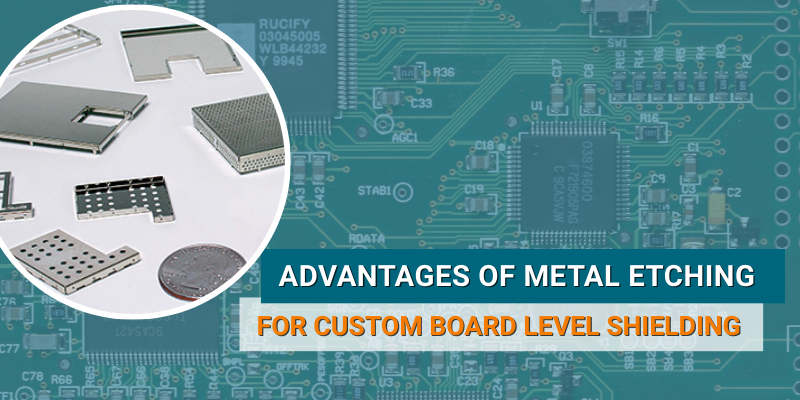
The Advantages of Metal Etching for Custom Board Level EMI Shielding Solutions
Board level EMI shielding is imperative in en...
What is Board-Level EMI Shielding and Why Does It Matter for PCB Design
In the electronics industry, where devices ar...

Custom BeCu Board Level Shielding: Precision Protection for Critical Applications
Electronic systems are steadily becoming fast...

4 Differences Between Thermally and Electrically Conductive Elastomers
Conductive elastomers make a significant cont...

The Role of EMI Shielding in Medical Devices
Conductive elastomers make a significant cont...

Industry-Specific EMI RFI Shielding Applications
As the technology environment becomes increas...

5 Most Common Types of EMI Shielding Gaskets
EMI and RFI interferences are expressions of ...

4 Things to Consider When Choosing a Conductive Elastomer
Conductive elastomers make a significant cont...

The Role of Electrically Conductive Elastomers in EMI Shielding
From properties to composition, explore how e...

7 Benefits of EMI Shielding for Manufacturers
Electromagnetic interference (EMI) is a const...

Why Choose The ID Group for Your EMI RFI Shielding Needs
As owner of The ID Group, I'm proud to say th...

TechEtch 2500 Series: A New Standard in Shielding Effectiveness
In the world of EMI shielding solutions, the ...

Custom Die-Cut Foam Gaskets: Everything You Need to Know
Essential components in various industries, c...

Gasket Materials for Effective Sealing and Protection
Gaskets play a critical role in many of today...

9 Metals and Materials Used in EMI Shielding
Electromagnetic interference (EMI) is a nuisa...

EMI Shielding Fingerstock Gasket Mounting Options—An Overview
Electromagnetic interference (EMI) can affect...

Critical Performance Variables for EMI Honeycomb Vents
As technology evolves, so do the products req...


How Tech Etch Products Help with EMI RFI Shielding Issues
Electronic devices need robust protection fro...


What to Know About Beryllium Copper and EMI RFI Shielding
Today, most electronic devices are equipped w...

What is EMI RFI Shielding and How Does it Work?
To understand what is EMI RFI shielding, it i...