

02 Mar Now Offering New Enclosure Shielding Gaskets
At The ID Group, we’re used to working closely with engineers who need EMI/RFI shielding solutions that perform reliably in real operating conditions. In many enclosure-based systems, shielding performance is ultimately determined at the interface, specifically at doors, removable panels, and service access points, where long-term mechanical contact must be maintained.
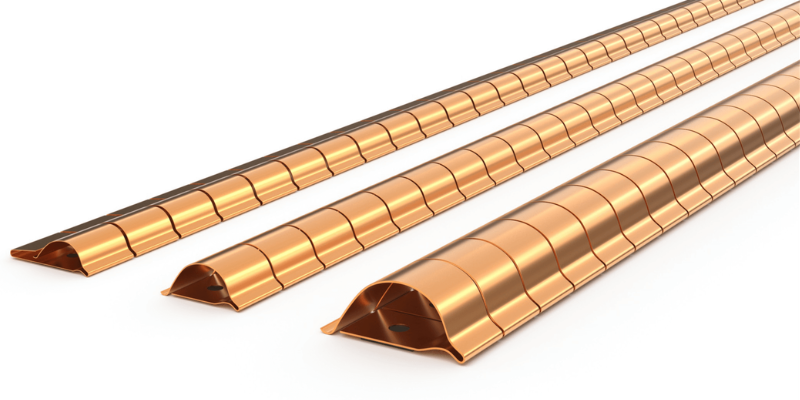
I am pleased to announce that The ID Group now offers Tech Etch’s new enclosure shielding gasket line as part of our broader portfolio of EMI RFI shielding solutions. These gaskets are a valuable addition for engineering teams designing or upgrading cabinets, rack systems, and other enclosures where repeatable shielding performance and long-term durability are essential.
About Our Enclosure Shielding Gaskets
Our new line of enclosure shielding gaskets includes two primary profile types:
- Folded fingerstock gaskets
- Fold-over fingerstock gaskets
Both are designed for use in enclosure interfaces where repeatable contact and mechanical stability are required. These profiles are intended for serviceable enclosure applications where repeated opening and closing requires stable contact, mechanical resilience, and consistent EMI/RFI performance.
Folded Fingerstock Gaskets
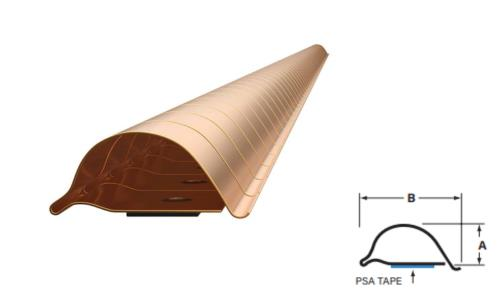
The folded fingerstock profiles are engineered from high-performance beryllium copper and are designed to provide reliable EMI/RFI shielding across a broad range of deflection and compression conditions. A key feature of this design is the reinforced folded base, which helps reduce wear during repeated use.
From an engineering standpoint, this is particularly important in applications where access panels or doors are opened regularly and where gasket durability directly affects long-term shielding performance.
Fold-Over Fingerstock Gaskets
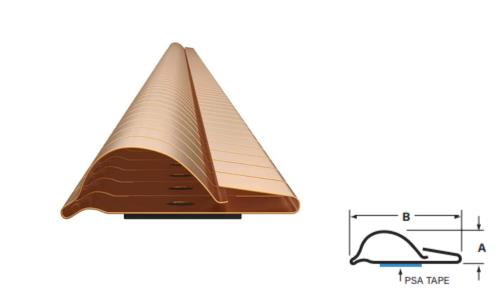
The fold-over profiles are designed to provide the same core shielding function while adding protection for individual contact fingers during compression. This can be especially beneficial in applications where repeated cycling, alignment variability, or mechanical handling may otherwise increase the risk of finger damage.
These profiles are also well-suited for high-frequency and magnetic field applications, making them relevant across a broad range of enclosure and electronic system designs.
Why This New Product Line Is Relevant
In many EMI-sensitive applications, the enclosure seam is one of the most critical points in the shielding path. Even when an enclosure is well designed, shielding performance can degrade if the gasket does not maintain stable contact through repeated compression cycles.
This is a common issue in serviceable enclosures. Over time, gaskets can lose resilience, wear at contact points, or become damaged during repeated opening and closing. The result is often inconsistent shielding performance, increased maintenance, and added risk during validation or field operation.
Our new enclosure gaskets are engineered with these practical concerns in mind. The focus is not only on shielding effectiveness, but also on maintaining contact integrity and durability in high-use applications.
Engineering Considerations for Enclosure Gasket Selection
For engineers evaluating seam-level shielding, several factors typically drive gasket selection:
1. Contact Consistency Over Time
Shielding performance at the seam depends on stable electrical contact. If a gasket deforms or wears prematurely, performance can degrade even when the rest of the enclosure design remains sound.
2. Repeated Compression and Cycle Durability
In serviceable systems, gasket performance must hold up across many access cycles. This is especially important in cabinets, racks, and panels that are opened during routine maintenance.
3. Mechanical Protection of Contact Features
Where gasket fingers are exposed to repeated compression or imperfect alignment, protecting those contact elements can support longer service life and more predictable performance.
4. Integration Into Standard Assembly Processes
These gaskets are supplied with traditional non-conductive adhesive (PSA), with additional options available upon request. This supports common enclosure assembly methods while allowing flexibility for application-specific requirements.
These considerations are central to how engineers specify gasketing in real systems, and they are exactly the areas this new product line is designed to address.
Strengthening EMI Shielding Support for Engineers
Our new enclosure gasket line strengthens our EMI product portfolio and complements The ID Group’s existing EMI RFI shielding solutions used in enclosure-level shielding strategies. It gives engineering teams additional options when durability, repeatable compression, and long-term seam performance are central to the design, while helping create better alignment between electrical shielding requirements and the mechanical realities at the enclosure interface.
As experts in EMI/RFI shielding, our role is to support engineers with practical component selection and application guidance. We work from the enclosure design, the operating conditions, and the performance objectives to help identify the right solution for each application. Whether you are addressing seam leakage in an existing platform, replacing worn gasketing, or designing a new enclosure, reach out to us for a strong set of options for improving long-term EMI shielding reliability.
Now Offering New Enclosure Shielding Gaskets
Board level EMI shielding is imperative in en...
The Advantages of Metal Etching for Custom Board Level EMI Shielding Solutions
Board level EMI shielding is imperative in en...

What is Board-Level EMI Shielding and Why Does It Matter for PCB Design
In the electronics industry, where devices ar...

Custom BeCu Board Level Shielding: Precision Protection for Critical Applications
Electronic systems are steadily becoming fast...

4 Differences Between Thermally and Electrically Conductive Elastomers
Conductive elastomers make a significant cont...

The Role of EMI Shielding in Medical Devices
Conductive elastomers make a significant cont...

Industry-Specific EMI RFI Shielding Applications
As the technology environment becomes increas...

5 Most Common Types of EMI Shielding Gaskets
EMI and RFI interferences are expressions of ...

4 Things to Consider When Choosing a Conductive Elastomer
Conductive elastomers make a significant cont...

The Role of Electrically Conductive Elastomers in EMI Shielding
From properties to composition, explore how e...

7 Benefits of EMI Shielding for Manufacturers
Electromagnetic interference (EMI) is a const...

Why Choose The ID Group for Your EMI RFI Shielding Needs
As owner of The ID Group, I'm proud to say th...

TechEtch 2500 Series: A New Standard in Shielding Effectiveness
In the world of EMI shielding solutions, the ...

Custom Die-Cut Foam Gaskets: Everything You Need to Know
Essential components in various industries, c...

Gasket Materials for Effective Sealing and Protection
Gaskets play a critical role in many of today...

9 Metals and Materials Used in EMI Shielding
Electromagnetic interference (EMI) is a nuisa...

EMI Shielding Fingerstock Gasket Mounting Options—An Overview
Electromagnetic interference (EMI) can affect...

Critical Performance Variables for EMI Honeycomb Vents
As technology evolves, so do the products req...


How Tech Etch Products Help with EMI RFI Shielding Issues
Electronic devices need robust protection fro...

What Is EMI Shielding Effectiveness and How to Measure It?
In order to ensure the proper functioning of ...

What to Know About Beryllium Copper and EMI RFI Shielding
Today, most electronic devices are equipped w...

What is EMI RFI Shielding and How Does it Work?
To understand what is EMI RFI shielding, it i...